
Heavy Equipment Pay Plans: How to Drive Profit and Retention for CAT, John Deere, and Independent Shops
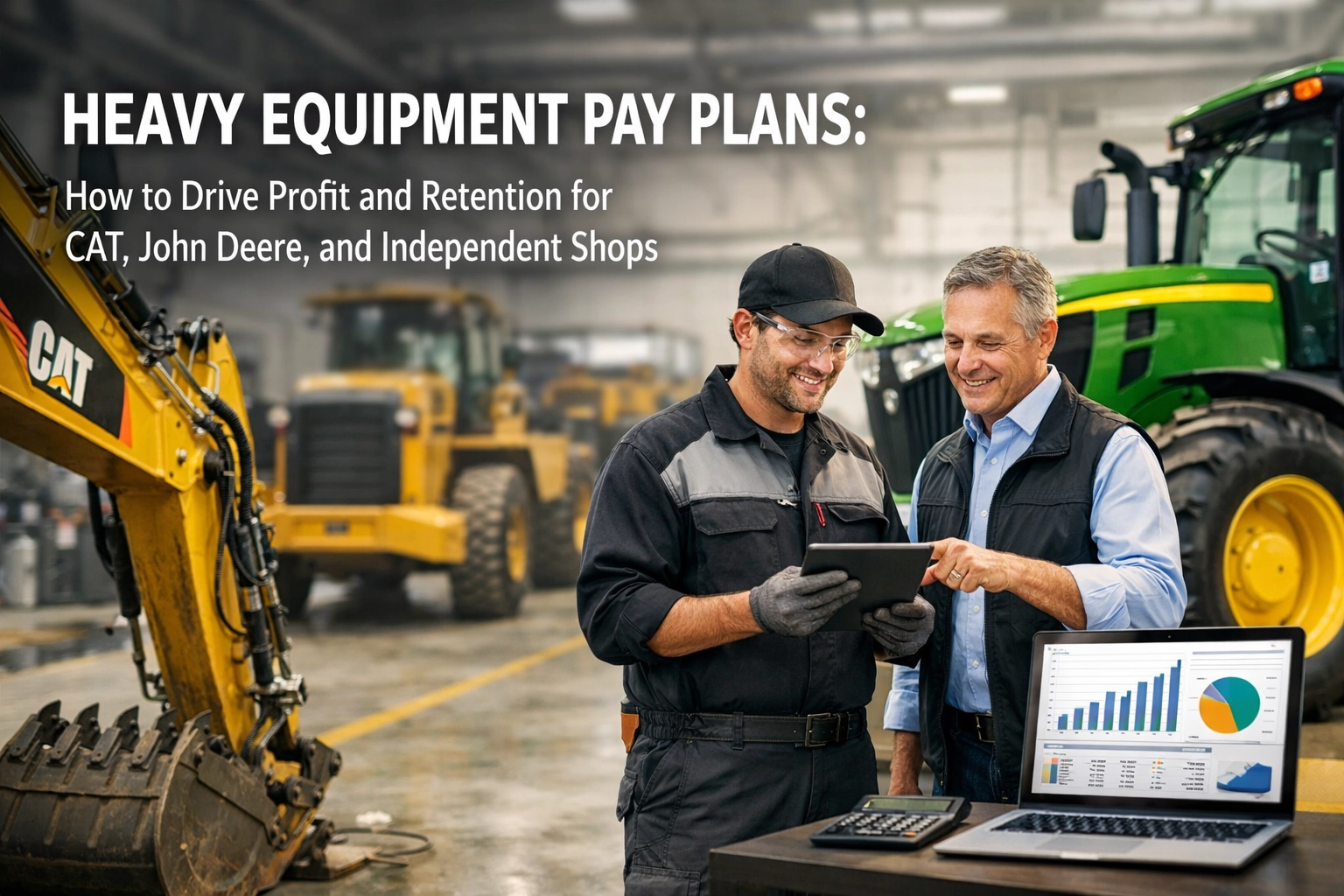
Are you still paying your heavy equipment service advisors like they're writing up oil changes?
If your pay plan looks anything like a standard automotive dealership model: commission on labor gross, hours per RO, maybe a CSI bonus thrown in: you're missing the entire point of what makes heavy equipment service profitable. And you're probably bleeding talent to competitors who figured this out years ago.
Let's be clear: a hydraulic rebuild on a 349 excavator isn't the same as a brake job on a Camry. The sales cycle is longer. The technical knowledge is rarer. The customer conversation revolves around downtime cost and fleet uptime, not whether they want synthetic oil. So why would you use the same pay structure?
The Automotive Model Breaks Down in Heavy Equipment
In automotive, an advisor might handle 15-20 repair orders in a day. Volume matters. Speed matters. In your world? A single service job might span three weeks and generate $75,000 in revenue. If you're rewarding "ROs closed per day," you're incentivizing the wrong behavior entirely.
Here's what's different in heavy equipment service:
Longer Sales Cycles: When a customer brings in a dozer with transmission issues, your advisor isn't upselling wiper blades. They're coordinating diagnostics, sourcing hard-to-find parts, managing a multi-week repair timeline, and keeping that customer informed every step of the way. That's project management, not transactional sales.
Field vs. Shop Complexity: Many of your service calls happen in the field: on a job site, at a quarry, or in the middle of a farm. Travel time eats into productivity. Weather delays projects. Your advisor needs to account for "wrench time" versus total time on the clock, and your pay plan needs to reflect that reality.
Rental Fleet Pressure: If you're running a rental operation alongside your service department (like most CAT and Deere dealers do), your service team is also responsible for ready-to-rent turnaround times. A backhoe sitting in your bay for an extra two days isn't just a service bottleneck: it's lost rental revenue. Your pay plan should reward speed and quality when it comes to fleet equipment.
Start With a Higher Base: Because the Talent Pool Is Smaller
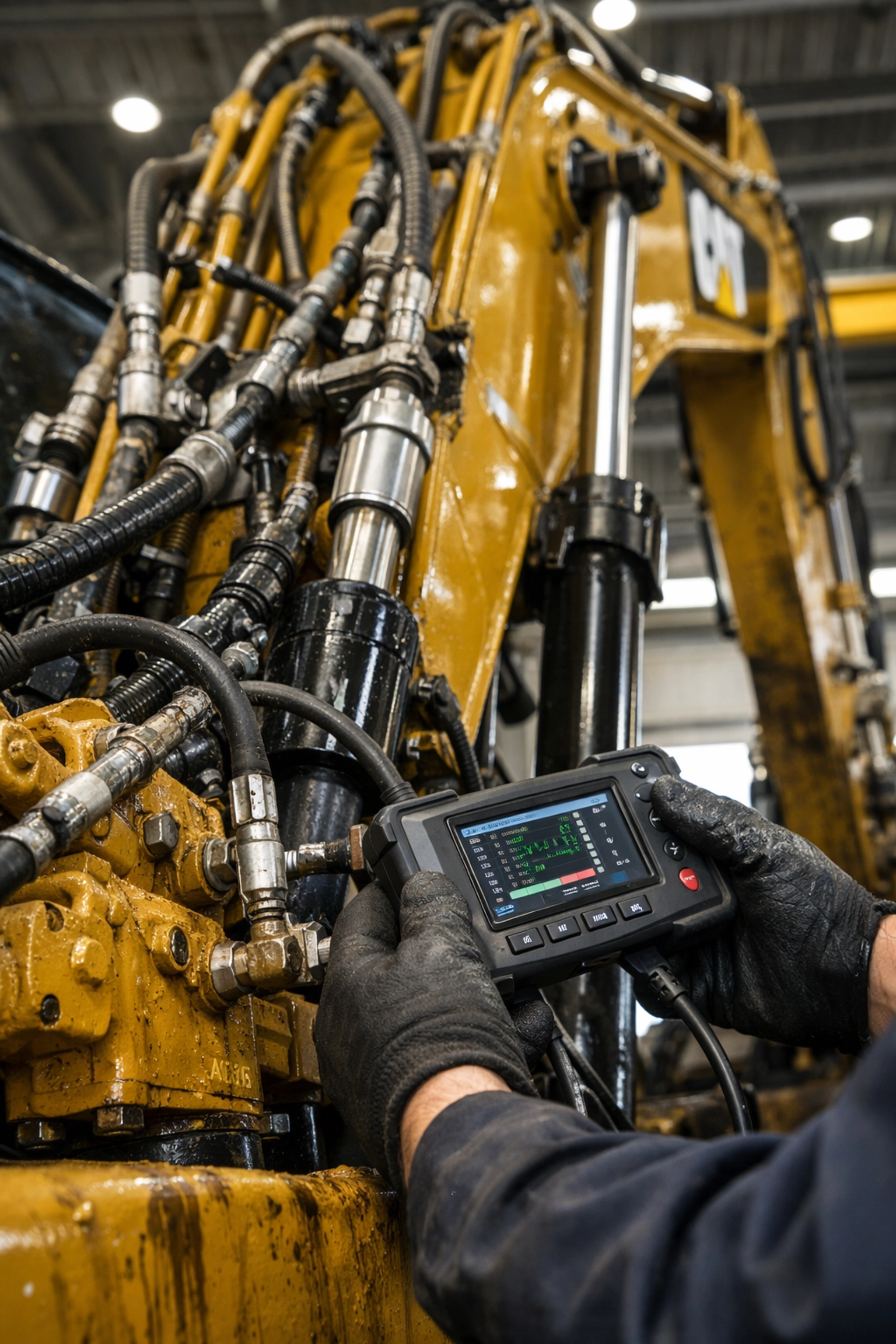
Let's face it: finding a service advisor who understands hydraulic systems, diesel engines, and can talk to a fleet manager about total cost of ownership? That's not a Craigslist hire. These folks are rare, and they know it.
Your base pay needs to reflect the specialized knowledge required. In automotive, base pay might be $40K-$50K. In heavy equipment, you're looking at $55K-$70K depending on your market: sometimes more for advisors with deep technical backgrounds or OEM certifications.
Why start higher? Because if you lowball the base and rely too heavily on commission, you'll create income volatility that drives your best people away. When a $90,000 engine overhaul gets delayed because the customer's financing fell through, your advisor shouldn't take a pay cut for something outside their control.
Tie Commission to Net Profit, Not Just Labor Gross
Here's where most heavy equipment shops get it wrong: they copy the automotive playbook and pay commission on labor gross profit. The problem? In heavy equipment, parts margin and job efficiency matter just as much as labor.
A better structure ties advisor compensation to Service Net Profit or even EBITDA contribution. Why? Because it rewards the behaviors that actually drive profitability:
- Sourcing parts strategically (OEM vs. aftermarket when it makes sense)
- Managing job timelines to avoid unnecessary overtime labor
- Controlling shop supplies and consumables
- Upselling preventive maintenance contracts that generate recurring revenue
When advisors have skin in the game at the net profit level, they start thinking like mini-general managers. They care about the stuff you care about: not just writing bigger tickets.
One benchmark we see working well: 8-12% of service department net profit as the commission pool for advisors, scaled by individual contribution. It keeps labor costs predictable while rewarding the right outcomes.
Field Service Deserves Its Own Incentive Structure
If you're running field service techs, your advisors are coordinating mobile repairs: and that's a different animal. Travel time, mobilization costs, and the unpredictability of field work all create friction.
Here's a structure that works:
1. Separate "Field" and "Shop" Targets: Don't lump them together. Field jobs have lower gross profit margins (because of travel), but they're often higher ticket and drive customer loyalty. Reward field job volume differently.
2. Efficiency Bonus for Wrench Time: Pay a kicker when wrench time exceeds 70% of total billable time on field jobs. It rewards advisors who plan jobs tightly and minimize wasted hours.
3. Emergency Service Premium: Offer a flat bonus ($100-$250) for emergency field calls that get a customer back up and running within 24 hours. It incentivizes responsiveness: which is everything in heavy equipment.

Rental Fleet Uptime: The Secret Weapon for CAT and Deere Dealers
If you're a dealer with a rental fleet, this is where you can really differentiate your pay plan. Rental revenue is predictable revenue: but only if your equipment is ready to rent.
Build a Ready-to-Rent Incentive into your service advisor pay plan. Here's how:
- Track turnaround time on rental fleet equipment (from drop-off to rental-ready)
- Set a benchmark (e.g., 48 hours for routine service, 5 days for major repairs)
- Pay a monthly bonus when 90%+ of fleet work meets or beats the benchmark
This does two things: it keeps your rental bays moving, and it signals to your advisors that rental fleet work isn't second-tier work. It's mission-critical.
Retention Through Profit Sharing and Tenure Bonuses
The average turnover cost for a skilled service advisor in heavy equipment is astronomical: often $80K-$120K when you factor in lost productivity, recruiting, and training. So why not redirect some of that cost into keeping your best people?
Consider adding:
Annual Profit Sharing: A year-end bonus tied to overall dealership or service department profitability. It creates long-term alignment and gives advisors a reason to stick around through the full calendar year.
Tenure-Based Kickers: At 3 years, 5 years, and 10 years, add a permanent bump to base pay or commission percentage. It rewards loyalty and signals that you're invested in their career.
Certification Reimbursement: Pay 100% of the cost for CAT, Deere, or ASE certifications: and add a bump to base pay when they complete them. It builds technical depth and shows you value skill development.
These aren't "nice to haves." In a labor market where skilled heavy equipment advisors can walk across the street and get hired tomorrow, retention is your competitive advantage.
Moving From Order-Taker to Consultative Advisor
Here's the shift that changes everything: your service advisors shouldn't be order-takers. They should be consultative maintenance advisors who help customers minimize total cost of ownership.
That means training them to ask the right questions:
- "How many hours per week is this machine running?"
- "What's your cost per hour of downtime on this equipment?"
- "Have you budgeted for a rebuild cycle, or are we running this until failure?"
Sound familiar? It's the same philosophy behind our Words That Sell Service approach: but adapted for heavy equipment jargon. Instead of "peace of mind," you're talking fleet uptime. Instead of "safe for your family," it's job site safety and compliance. Instead of "factory-trained technicians," it's OEM-certified diesel specialists.
When advisors shift from transactional to consultative, they start building long-term service contracts, preventive maintenance agreements, and customer relationships that drive repeat revenue. And that's what you should be paying for.
Build the Plan That Fits Your Operation
There's no one-size-fits-all pay plan for heavy equipment service centers. A 12-location John Deere dealer with a massive rental fleet has different needs than a 3-bay independent shop specializing in Komatsu rebuilds.
But the fundamentals stay the same:
- Pay a competitive base that reflects the specialized knowledge required
- Tie commission to net profit, not just labor gross
- Reward field service efficiency separately from shop work
- Incentivize rental fleet turnaround if it applies to your business
- Build in retention bonuses that reward tenure and skill development
- Train your advisors to think consultatively, not transactionally
Your pay plan isn't just about compensation: it's about what you're willing to reward. And in heavy equipment, you need to reward profitability, efficiency, customer retention, and technical expertise. Get that right, and you'll build a service department that's profitable and a place where your best people want to stay.
Want help building a pay plan that actually works for your operation? Let's talk: https://swservicesolutions.com/heavy-equipment