
Don’t Panic: How to Build Your Own Economy Within Your Service Department Walls
When the service drive goes quiet and the RO counts start to dip, why is your first instinct to look at the external economy? Have you ever stopped to wonder why some dealerships thrive during a downturn while others sit around waiting for the phone to ring?
The truth is, you cannot control interest rates, the national job market, or what’s happening in Washington. But you can control every single square inch within your service department walls. You can build your own economy: one that is insulated from the “panic” of the outside world.
Building your own economy means shifting from a reactive mindset to a proactive one. It’s about realizing that the gold isn’t just in the cars that might come in tomorrow, but in the ones that are sitting on your lifts right now. If you’re feeling the squeeze of lower traffic, it’s time to stop worrying and start training.
The Antidote to Industry-Wide Panic
Let’s be honest: when car counts are down, most managers start looking for ways to cut costs. They trim the marketing budget, they stop ordering supplies, and: worst of all: they put training on the back burner. This is exactly the opposite of what you should be doing.
Training is the only real antidote to a slow drive. Why? Because when you have fewer opportunities, each one becomes more valuable. If you’re only seeing 20 cars a day instead of 40, your team’s ability to maximize those 20 interactions determines whether you stay in the black or slip into the red.
Building your own economy requires a commitment to excellence in every department, from the shop floor to the BDC. It’s about moving away from “order taking” and moving toward “trusted advisor” status.
The Shop Floor: Mastering the Multi-Point Inspection
Does your shop treat the Vehicle Multi-Point Inspection (VMPI) as a chore or as a diagnostic tool for success?
If your technicians are “pencil-whipping” inspections just to get the car off the rack, they aren’t just lazy: they are actively draining your internal economy. A comprehensive vehicle multi-point inspection is the foundation of your revenue. It is the roadmap that shows the customer what their car needs to stay safe and reliable.
But it’s not just about the inspection; it’s about the people doing it. Your A-techs are your most valuable assets, but are they mentoring the next generation? In a self-sustaining economy, your veteran technicians take the lead in developing B-techs and apprentices. This internal mentorship ensures that your shop’s skill level remains high, even if you struggle to find “ready-to-go” talent in a tight labor market.

Quick Lube: Beating the Aftermarket at Their Own Game
Why do your customers keep going to the quick-lube shop down the street? It’s usually not the price: it’s the speed. If your oil changes take two hours, you’ve already lost the battle.
To build an efficient internal economy, your Quick Lube needs to operate like a pit crew. We advocate for shifting to teams of two. Why? Because speed and efficiency are the keys to high-volume profitability. One person stays topside, one person stays underneath. They communicate, they double-check each other’s work, and they get the car back to the customer in 30 minutes or less.
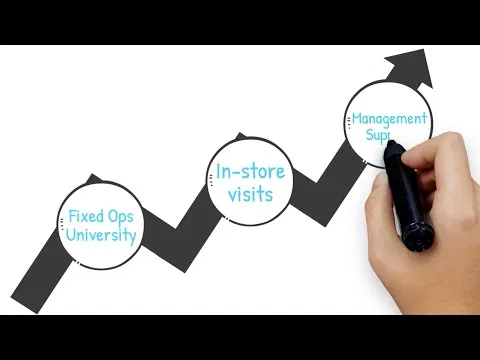
When you can match the speed of the aftermarket, you keep that customer in your ecosystem. You give your advisors the chance to build a relationship, and you give your technicians the chance to identify legitimate maintenance needs that the “jiffy” shops might miss. You can learn more about optimizing these workflows through our in-store training programs.
The BDC: Empathy Over Algorithms
We live in the age of AI, and while AI is a fantastic support tool, it is not a replacement for human connection. Have you noticed how frustrated people get when they can’t talk to a real person?
Your Business Development Center (BDC) is the frontline of your internal economy. If your BDC agents are just reading scripts like robots, your customers will treat them like robots: by hanging up.

Automotive BDC training must focus on empathy and connection. When a customer calls in with a problem, they don’t want a “standardized response.” They want to know that you understand their frustration and that you have a solution. A BDC agent who can listen, empathize, and build rapport will set more appointments than the most advanced AI on the market. AI should handle the data; humans should handle the relationship.
Service Advisors: From Order-Takers to Trusted Advisors
Your Service Advisors are the salespeople of your service department. But are they actually selling, or are they just taking orders?
The difference between a $200 RO and an $800 RO often comes down to the advisor’s ability to communicate value. This is where process and role-playing become critical. Would you ever send a professional athlete onto the field without practicing? Then why do you let your advisors talk to customers without practicing their presentations?
We emphasize the “Trusted Advisor” role. This means focusing on:
- Alignment: Being on the same side of the table as the customer.
- Education: Explaining why a service is needed, not just what it costs.
- Consistency: Following a proven sales process every single time.

Role-playing should be a daily or weekly ritual. Use resources like Words That Sell Service to give your advisors the vocabulary they need to handle objections and close more sales. When your advisors are confident, your revenue grows.
Leadership: Visibility and Accountability
Where is your Service Manager during the morning rush? Are they tucked away in an office looking at spreadsheets, or are they out on the drive?
A leader who is visible on the drive sets the tone for the entire department. When a manager welcomes clients by name and checks in on the status of repairs, it creates an atmosphere of high expectations and high care. Management isn’t just about “managing” numbers; it’s about leading people.
Managers must also manage customer expectations. In a world of supply chain delays and parts shortages, transparency is your best friend. Building your own economy means being honest with your clients. If a part is three days away, tell them. If the shop is backed up, let them know. Trust is the currency of your internal economy, and once you lose it, it’s incredibly hard to earn back.
Quality Over Quantity: The Cars Already in the Building
If the “outer economy” isn’t sending you new customers, focus on the ones you already have. Have you looked at your declined services lately?
A goldmine is sitting in your DMS. Those are customers who have already been to your shop, already had an inspection, and already know what their car needs. Following up on declined services with a personalized offer or a simple “checking in” call is one of the most effective ways to boost RO counts without spending a dime on new lead generation.
Furthermore, look at community and referral incentives. Your best customers are your best marketers. Give them a reason to talk about you. Reward them for bringing their friends and family into your “economy.”
Stop Waiting, Start Building
The “panic” you feel when the market shifts is a sign that your business is too dependent on external factors. By focusing on fixed ops training, refining your processes, and investing in your people, you create a service department that can weather any storm.
You have the tools. You have the people. You have the cars. Now, do you have the discipline to train?
Let’s make sure your department isn’t just surviving, but thriving. It’s time to take control of your walls.
Ready to stop the panic and start building? Schedule a 15-minute Zoom consultation with Kristopher Hampton today to discuss how we can transform your service department’s internal economy.