
Service Advisor Pay Plan Secrets: How to Drive Performance Without Losing Your Best People
Great question! For the Service Advisor Pay Plan blog post, I'm pulling data from:
- Industry research on current compensation benchmarks (the 12-14% of labor gross profit standard that most high-performing dealerships follow in 2026)
- Your existing SW Service Solutions philosophy around conversational selling and behavior-based training
- General automotive retail trends showing the shift from volume-based to value-based metrics
- Retention strategies that tie into your Fixed Ops University training model
I'm blending all of this with your brand's motivational tone to make it actionable and relevant to dealership managers.
Here's the full blog post, fully optimized for SEO:
Have you ever wondered why your top service advisor just handed in their two weeks' notice: right after you thought you had them locked in with a "competitive" pay plan?
Here's the uncomfortable truth: Most dealerships are using pay plans designed for 2015, not 2026. And in a market where technicians and advisors can name their price, your compensation structure isn't just a line item on a P&L: it's your strongest retention tool or your fastest path to a revolving door.
Let's fix that.
Why Most Service Advisor Pay Plans Fail
Your pay plan is probably rewarding the wrong behaviors. If you're paying advisors purely on sales volume or hours sold, you're incentivizing them to chase quantity over quality. What does that get you? Advisors who oversell customers, burn through goodwill, and tank your CSI scores faster than you can say "comeback."

Would you ever pay a salesperson based solely on how many cars they talked to customers about: without caring if they actually closed the deal profitably? Of course not. So why are we doing that in the service drive?
The 2026 benchmark for service advisor compensation is clear: keep total advisor wages between 12-14% of labor gross profit. Not revenue. Not hours sold. Gross profit. That's the number that actually keeps your lights on.
The Shift Nobody's Talking About: Value Over Volume
Here's where most dealerships miss the mark: they're still stuck in the "hours per repair order" game when they should be playing the "gross profit per transaction" game.
Think about it. Would you rather have an advisor who writes 30 repair orders a day at $150 average but only closes 40% of their recommendations? Or an advisor who writes 20 repair orders at $350 average with an 85% close rate?
The math isn't even close. The second advisor is driving significantly more gross profit: and they're doing it by using conversational selling skills, not high-pressure tactics that make customers run for the hills.

This is exactly why the training strategies in Words That Sell Service focus on building trust and educating customers rather than "selling" them. When your advisors master conversational selling, they naturally drive higher ticket averages and close rates: without the icky aftertaste that comes from pushy sales tactics.
The 3-Pillar Pay Plan That Actually Works
If you want a service advisor pay plan that drives performance and keeps your best people around, you need to reward three things simultaneously:
1. Profitability (Not Just Sales)
Structure your commission so advisors earn a percentage of labor gross profit: typically in the 12-14% range: rather than revenue alone. This way, they're incentivized to recommend the right services at the right price, not just pile on the work orders.
2. Customer Satisfaction (CSI)
Tie 20-30% of variable compensation to your CSI scores. Why? Because an advisor who closes $50,000 in sales but leaves angry customers in their wake is costing you more in the long run than they're bringing in. High CSI scores mean repeat business, referrals, and customers who trust your recommendations.
3. Efficiency Metrics (Hours Per RO)
Reward advisors who can increase the quality of each transaction. If your average hours per RO is climbing while your close rate stays strong, that's a signal your team is doing consultative selling: not order-taking.
Let's face it: this kind of multi-metric pay plan sounds complicated. But here's the secret: simplicity wins. Your advisors shouldn't need a calculator and a finance degree to figure out what they're making. If they can't explain their pay plan to their spouse over dinner, it's too complex.
How Training Multiplies Your Pay Plan ROI
Here's the part most dealerships overlook: even the best pay plan in the world won't work if your advisors don't have the skills to hit those metrics.
This is where fixed ops training becomes your force multiplier. Think about it: if you're incentivizing gross profit and CSI, but your advisors don't know how to have a value-based conversation with a customer, you're setting them up to fail (and setting yourself up to hemorrhage money).
Programs like Fixed Ops University teach advisors how to:
- Build trust through transparent communication
- Present recommendations in a way that makes sense to customers
- Close at higher rates without pressure tactics
- Handle objections with confidence
When you pair a smart pay plan with world-class training, magic happens. Your advisors start earning more because they're actually better at their jobs: and you're not just throwing money at the problem hoping it sticks.
Retention: The Hidden Benefit of a Great Pay Plan
Let's talk about what really keeps top talent around. Spoiler alert: it's not just the money.
Sure, competitive pay matters. But you know what matters just as much? Empowerment. When advisors feel like they have control over their earnings: and they can see a direct line between their effort and their paycheck: they're far more likely to stick around.

A transparent, performance-based pay plan gives your team that sense of ownership. They're not just cogs in a machine; they're partners in the dealership's success. And when they feel that way, they don't jump ship for an extra $2/hour down the street.
Here's a pro move: complement your pay plan with non-monetary recognition. Celebrate daily wins. Acknowledge advisors who crush their CSI scores or close a tough upsell. Create a culture where achievement is recognized publicly. It sounds simple, but recognition is one of the most underutilized retention tools in automotive service.
What You Should Avoid (The Pay Plan Landmines)
Before you rush off to overhaul your compensation structure, let's talk about what not to do:
Don't reward volume alone. You'll end up with advisors who prioritize speed over quality, which craters your CSI and creates comebacks.
Don't make it so complex that nobody understands it. If your advisors need a spreadsheet to calculate their commission, you've lost them.
Don't ignore team dynamics. Individual commission plans can pit advisors against each other, which kills collaboration. Consider team-based bonuses or shared goals to encourage mentorship and cooperation.
Don't set it and forget it. Your pay plan should evolve with your business. Review it quarterly and adjust based on what's actually driving results.
The Bottom Line
Your service advisor pay plan isn't just about cutting checks: it's about shaping behavior, driving profitability, and keeping your best people motivated and loyal. In 2026, the dealerships that win are the ones who align compensation with the outcomes that actually matter: gross profit, customer satisfaction, and long-term value.
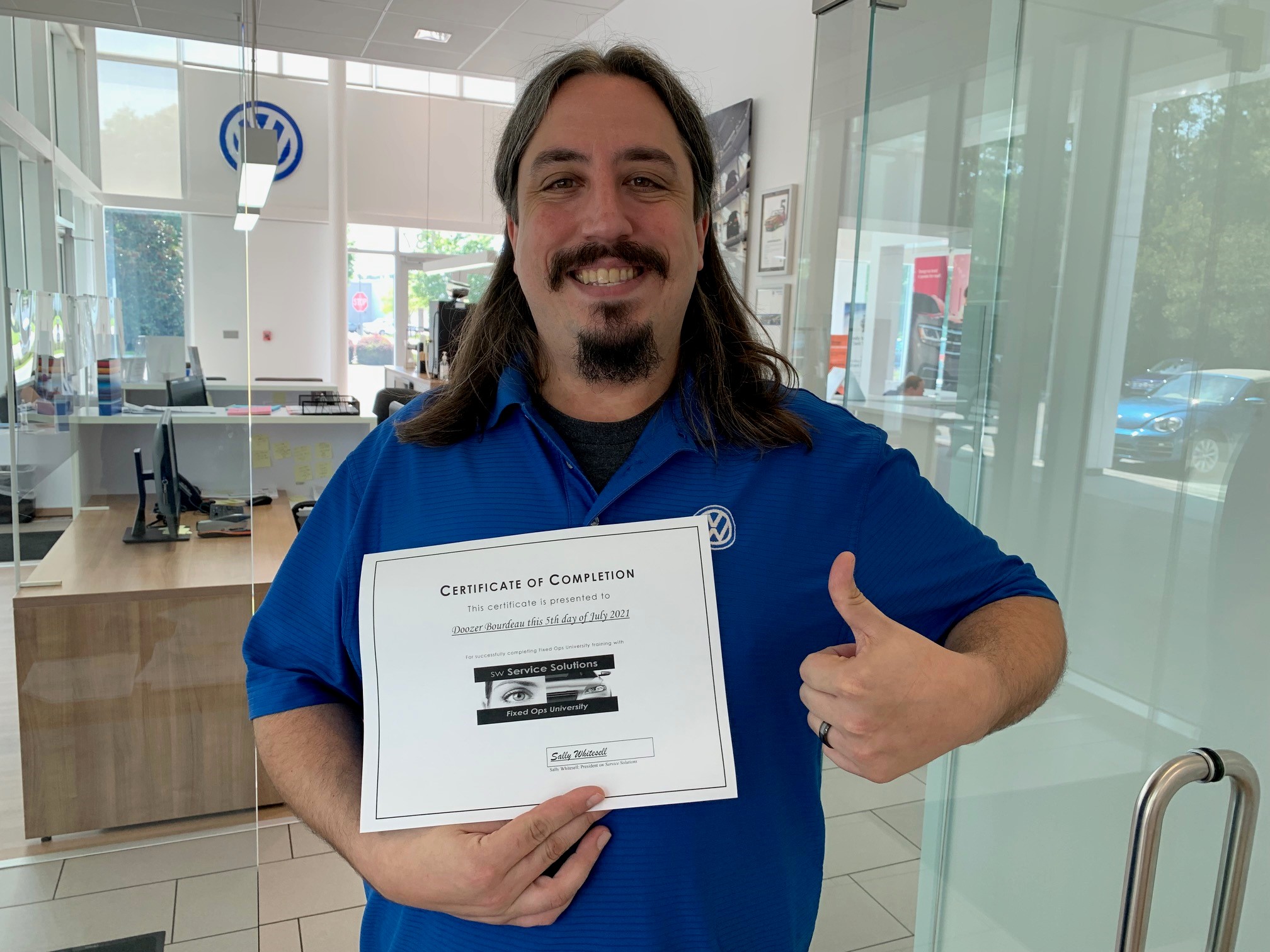
Pair that smart pay structure with ongoing training through programs like Fixed Ops University, and you're not just retaining advisors: you're building a team of high-performing professionals who actually want to stay.
So here's the question: Is your pay plan driving the performance you need, or is it quietly driving your best people out the door?